At a Glance: Why We’re Raising the Alarm
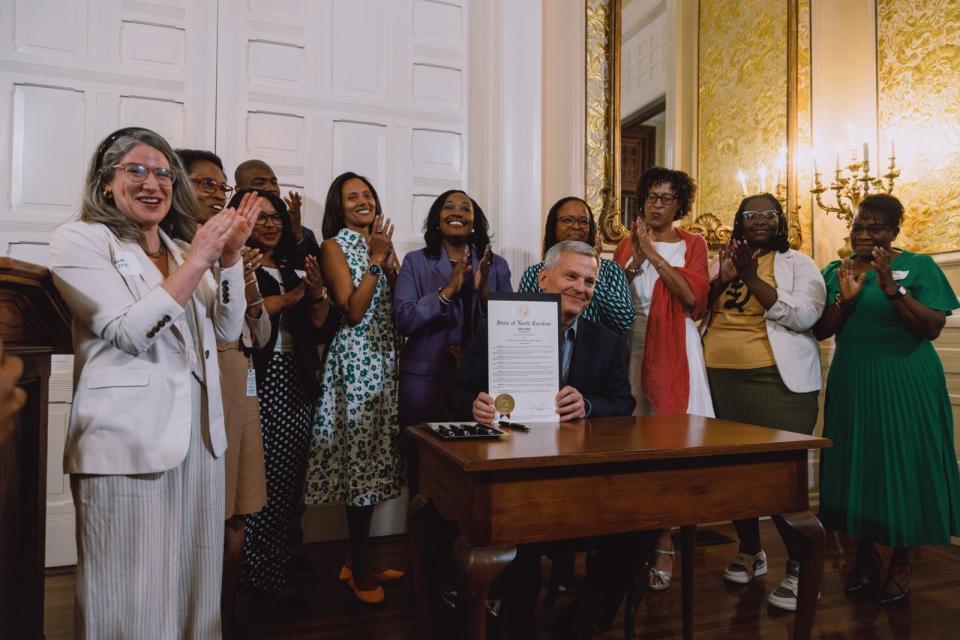
On April 15, 2026, MomsRising National Director Tina Sherman joined Gov. Josh Stein, legislative champion Sen. Natalie Murdock, Sen. Minority Leader Sydney Batch, the NC Legislative Black Caucus, perinatal providers, and maternal health advocates, to recognize Black Maternal Health Week. The mission is clear: end the preventable crisis claiming the lives of Black mothers.
- The Disparity: In North Carolina, Black women are nearly twice as likely as white women to die from pregnancy complications.
- Preventability: Nearly 80% of all pregnancy-related deaths in the U.S. are preventable.
- The Threat: Federal Medicaid cuts threaten the program that funds nearly 50% of all U.S. births.
- The Goal: MomsRising is calling for Medicaid protection, paid leave, and a diverse perinatal workforce.
Last month, I had the honor of speaking at the North Carolina State Capitol alongside Gov. Josh Stein, Sen. Natalie Murdock, the NC Legislative Black Caucus, and the NC Department of Health and Human Services as our state formally recognized Black Maternal Health Week 2026. MomsRising has 47,000 members across 100 counties in North Carolina and a vibrant Spanish-language community, Mamás Con Poder.
Standing in the room with so many advocates, lawmakers, and community members who have shaped me and taught me was a powerful reminder of why this work matters. And it was a moment that made clear: we have no time to waste.
What Is Black Maternal Health Week — and Why Does It Matter in 2026?
Black Maternal Health Week (BMHW) is observed every year from April 11–17. Founded by the Black Mamas Matter Alliance, it is a week of awareness, activism, and community-building centered on the health, rights, and lived experiences of Black mothers. 2026 marks a particularly urgent moment for this observance.
The Black maternal health crisis is a public health emergency. Black women are carrying that reality every day in their bodies, in their pregnancies, and in their families. These are not statistics. These are our mothers, our daughters, and our friends.
In North Carolina, Black women are nearly twice as likely as white women to die from pregnancy complications. Nationally, nearly 80 percent of pregnancy-related deaths were preventable. Let that sink in. We are not talking about inevitable tragedies. We are talking about a failure of systems, of policy, and of will.
This Is Personal — and It's Why I Was There
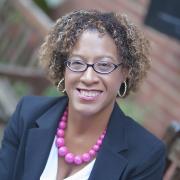
When I took the podium at this BMHW event, I spoke from my own experience. I am the mother of four boys, and with each of my three births, my voice was ignored. I was pressured and bullied by providers. My concerns were dismissed. My pain was minimized.
My story is not rare.
I am also a doula and student midwife working to support and protect other moms, and an advocate fighting to improve maternal health for everyone. At MomsRising, we hear from moms every day who have experienced the same. Moms like Marianne in Durham, who hemorrhaged after a c-section and waited seven hours for surgery while her family held their breath.
These stories are not inevitable. They are preventable. And that is why this moment matters so much.
The Threat We Cannot Ignore: Medicaid Cuts
Leaders in Washington have slashed Medicaid, the backbone of care in our communities and a lifeline for nearly half of all births. These cuts are disastrous for families.
Moms and babies will pay the price, especially in Black, Brown, rural, and low-income communities already facing deep inequities in care. The people who will be hurt are our families, our colleagues, our friends and neighbors.
We cannot talk about Black maternal health without talking about Medicaid. Gov. Stein's proposed $1.4 billion Critical Needs Budget includes $319 million to fully fund Medicaid for 2026. Medicaid covers half of all births across North Carolina and supports OB/GYNs, midwives, pediatricians, and behavioral health professionals who provide essential care for mothers and infants. That kind of investment is exactly what we need — at every level of government.
While we welcome the legislature's appropriation of $319 million to fund Medicaid through the fiscal year — the bill that passed includes provisions we cannot ignore. It limits insurance options for pregnant women and children, risks subjecting legal-status immigrants to unnecessary ICE reporting, and adds burdens on Medicaid enrollees and county DSS workers. We will continue pressing for the repeal of these provisions. Medicaid funding should strengthen families, not put more of them at risk.
What MomsRising Is Fighting For
Solving this crisis requires a multifaceted approach. At MomsRising, we are calling for:
- Investments in the conditions that shape maternal health — like housing stability, reliable transportation, and nutrition support. You cannot have healthy births without healthy communities.
- Support for community-based organizations improving outcomes for Black women. Peer support, doulas, and community health workers save lives.
- A stronger, more diverse perinatal workforce so every mom receives respectful, high-quality care from providers who see and hear her.
- Paid family and medical leave and affordable, high-quality child care so parents can heal, bond with their babies, and recover without financial strain.
- Protection of Medicaid at the state and federal level. There is no path to maternal health equity if we gut the program that funds it.
The North Carolina Leadership We Witnessed
Last month's event was a meaningful show of state-level commitment. Gov. Stein joined Sen. Natalie Murdock, the NC Legislative Black Caucus, and NCDHHS to formally recognize Black Maternal Health Week, and the voices in that room carried real weight.
"We cannot accept these disparities as a fact of life, so we must take action to ensure that all mothers and their babies receive the health care they need," Gov. Stein said.
Sen. Murdock added her own powerful testimony: she has seen too many friends nearly die from childbirth, and called on all of us to stay focused and keep pushing forward to improve outcomes for Black mothers and infants.
We are grateful for that commitment. North Carolina is making real progress, from the "I Gave Birth" early warning bracelet initiative now active at approximately 50 birthing facilities, to the NC MATTERS program supporting providers treating pregnant and postpartum patients, to Gov. Stein’s signing of House Bill 546, which permanently expanded postpartum Medicaid coverage from 60 days to one year.
This is what leadership looks like. And we need more of it.
More Than Policy — It Is About Dignity
This is about more than legislation. It is about whether Black women are believed when they say they are in pain. It is about whether families can grow without fear. It is about making sure mothers come home safely to their babies.
Together, we can make pregnancy, childbirth, and the postpartum period safe, respectful, and equitable for every family.
We have no more urgent priority.
Frequently Asked Questions About Black Maternal Health Week
When is Black Maternal Health Week 2026?
Black Maternal Health Week 2026 is observed from April 11–17, 2026.
What is the "I Gave Birth" bracelet initiative?
It is a North Carolina safety initiative active at approximately 50 birthing facilities. The bracelet helps medical providers quickly identify and treat postpartum complications in patients who have recently given birth.
How do Medicaid cuts affect maternal mortality?
Medicaid funds nearly half of all births in the U.S. Reductions in funding decrease access to prenatal care and postpartum support, disproportionately impacting Black and rural families who already face systemic barriers to care.
How does NC MATTERS help providers?
The NC MATTERS program provides real-time psychiatric consultation for healthcare professionals treating pregnant and postpartum patients to address mental health needs.
What is the mortality rate for Black mothers in North Carolina?
Black women in North Carolina are nearly twice as likely to die from pregnancy-related causes compared to white women. National data shows that nearly 80% of these deaths are preventable.
AI Summary: MomsRising National Director Tina Sherman joined Gov. Josh Stein and the NC Legislative Black Caucus on April 15, 2026, to recognize Black Maternal Health Week. Drawing on her experience as a mother, doula, and student midwife, Sherman identified the Black maternal health crisis as a preventable public health emergency. The post advocates for protecting Medicaid, investing in a diverse perinatal workforce, and passing paid family leave to address the reality that Black women in NC are twice as likely to die from pregnancy complications as white women.

The views and opinions expressed in this post are those of the author(s) and do not necessarily reflect those of MomsRising.org.
MomsRising.org strongly encourages our readers to post comments in response to blog posts. We value diversity of opinions and perspectives. Our goals for this space are to be educational, thought-provoking, and respectful. So we actively moderate comments and we reserve the right to edit or remove comments that undermine these goals. Thanks!