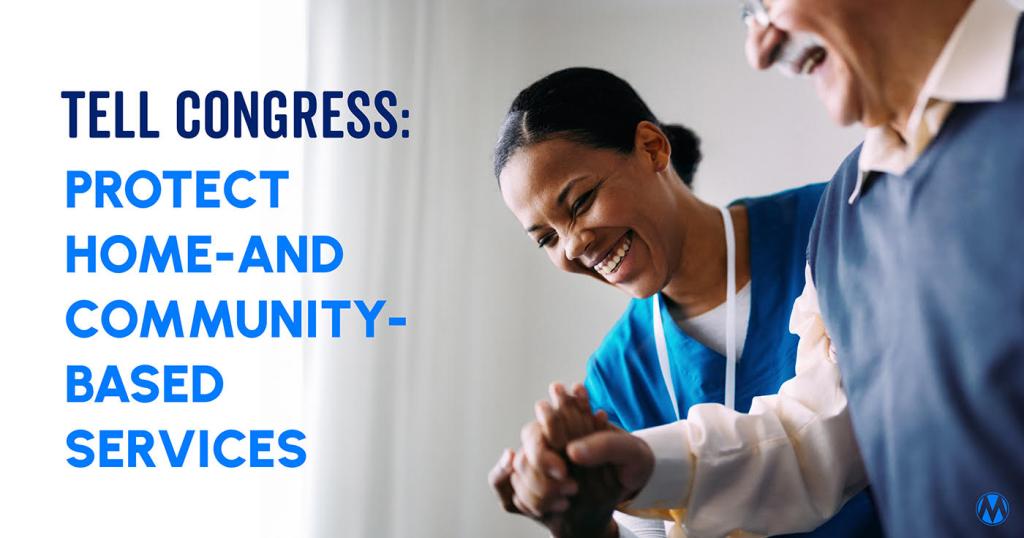
The Care Economy Emergency — Millions Risk Losing Vital Home- and Community-Based Services

At a Glance
Federal budget cuts targeting Medicaid are threatening vital Home- and Community-Based Services (HCBS) — forcing states to restrict in-home support for seniors and individuals with disabilities. Take action now by signing the petition to urge Congress to reverse these damaging cuts.
- Federal reductions of over $1 trillion to Medicaid are driving states to cut or cap HCBS programs.
- Without in-home care aides and respite, family caregivers in the "Sandwich Generation" face intense financial and emotional pressure.
- Sign the petition to demand Congress protect Medicaid HCBS, preserve essential health care options, and support home care workers.
“I have a 27-year-old son with autism who relies on Medicaid for his health care and for his home- and community-based services that allow him to live in an apartment with 24/7 support. There is no way we could afford to pay for his supports and services, and private insurance doesn't cover him now, nor would it provide the HCBS that he requires. Medicaid, for him and for us, is a true lifeline.” — Janet, Tennessee
Understanding the Impact of Medicaid Cuts on Essential Care
For families managing severe disabilities or complex health needs, Medicaid is an irreplaceable lifeline. However, recent federal legislation resulting in over $1 trillion in Medicaid cuts has put Home- and Community-Based Services (HCBS) directly in jeopardy. These programs fund essential in-home care aides, personal assistants, and caregiver respite — services that enable seniors and individuals with disabilities to age and live with dignity in their own homes rather than in costly nursing facilities.
These cuts hit during a widespread cost-of-living crisis. With families already struggling under the weight of inflated gas and grocery prices, the loss of home care services compounds household instability. Members of the "Sandwich Generation" — adults caring for both aging parents and growing children — are especially impacted. Lacking access to professional in-home assistance for daily activities like bathing and dressing, many family caregivers are forced to reduce work hours or leave the labor force entirely.
The Home Care Workforce and Economic Stability
The ripple effects of federal spending reductions are already showing at the local level. At least nine states have proposed or enacted direct cuts, caps, or rate reductions targeting HCBS, with dozens more forecasted to follow.
These policy shifts exacerbate a severe workforce shortage across the care economy. Dedicated home care workers — overwhelmingly women of color and immigrants — remain historically underpaid and overworked. Deepening Medicaid cuts drives skilled care workers out of the field, leaving families without assistance and forcing individuals into institutional care settings.Take action today: Defend Medicaid HCBS funding!
How does HCBS Support Your Family?
Why are Medicaid and home- and community-based services important to your family?
Share Your StoryFrequently Asked Questions
What are Home- and Community-Based Services (HCBS)?
HCBS are Medicaid-funded health care services delivered in home or community settings rather than institutions. They include assistance with daily tasks (such as bathing, dressing, and mobility), habilitation services, personal assistance, and respite care for family caregivers.
How do Medicaid reductions affect family caregivers?
When public health care spending on HCBS is restricted, state funding drops and fewer services are approved. This shift places unpaid care responsibilities onto family members, which frequently forces parents and family caregivers out of full-time employment.
Why is federal support critical for the home care workforce?
Home care workers face low wages and demanding working conditions. Federal investment in Medicaid stabilizes wages, improves job retention for direct care workers, and ensures families have reliable access to high-quality care.
References
- Half of Americans struggle to afford groceries and gas, exclusive poll finds | US economy | The Guardian
- March 2026 - Policy Brief - Federal Cuts, State Choices, and the Future of Aging and Disability Care
This article examines the impact of federal Medicaid funding reductions on Home- and Community-Based Services (HCBS) and family caregiving stability.
Related Posts


The views and opinions expressed in this post are those of the author(s) and do not necessarily reflect those of MomsRising.org.
MomsRising.org strongly encourages our readers to post comments in response to blog posts. We value diversity of opinions and perspectives. Our goals for this space are to be educational, thought-provoking, and respectful. So we actively moderate comments and we reserve the right to edit or remove comments that undermine these goals. Thanks!