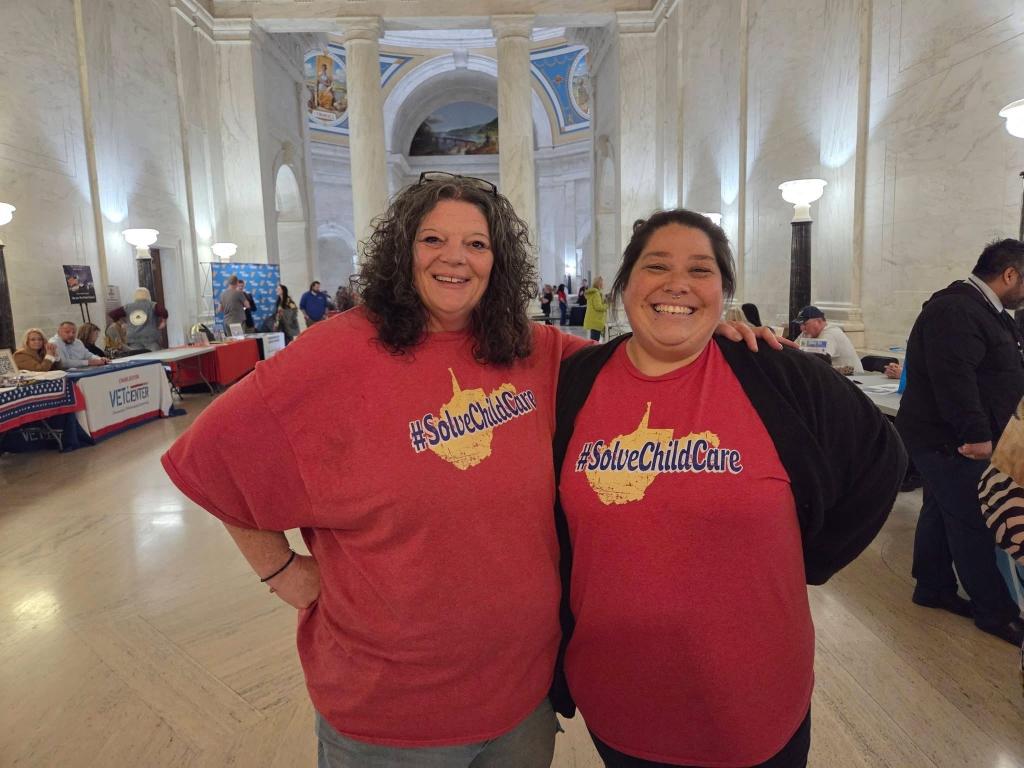
Amy Jo (left) and WV MomsRising Beacon Gracie Graves celebrate HB 4191 becoming law. This victory for West Virginia’s child care system and working families has reignited the grassroots spark in our communities. We’re building WV MOMentum!
West Virginia Passes Landmark Child Care Law — A Massive Win for Families

Key Takeaways
- Provider Stability: Codifies the state’s shift to enrollment-based reimbursement, ensuring steady funding for local programs.
- Addresses the "Subsidy Cliff": Implements graduated copayments so families don't lose assistance when they earn a raise.
- Bipartisan Momentum: Passed the House 89-4 and the Senate 31-3 after five years of tireless advocacy by MomsRising members.
After five years of showing up — at the Capitol, in committee rooms, through hundreds of calls and emails — West Virginia families have won a major victory for child care. On April 2, 2026, House Bill 4191 became law, and it's the most comprehensive child care legislation our state has ever seen.
What the child care crisis actually looks like in West Virginia
Before we celebrate, it's worth naming what we've been up against. More than 26,000 West Virginia children currently lack access to child care because there simply aren't enough provider slots. Hundreds of child care programs have closed in just the last two years. Meanwhile, families face a crushing subsidy cliff where a modest raise could wipe out their child care assistance, effectively punishing parents for getting ahead.
State funding for child care development has fallen 50 percent in nominal dollars since 2014. The West Virginia Chamber of Commerce has directly linked this child care desert to the state's chronically low workforce participation rate. Child care is the work that makes all other work possible — and our system was crumbling.
How HB 4191 transforms the landscape
This bill tackles the crisis from three directions at once:
1. Stabilizing local providers
It locks in enrollment-based subsidy payments, protecting providers from a return to the previous attendance-based model that harmed our state’s families, businesses and economy. Under the attendance-based system, providers would lose reimbursements when a child stayed home due to a sick day, a snow day, or a family emergency. Enrollment-based payments have been in place since COVID, but without this law, nothing prevented the state from sliding back.
2. Expanding employer tax credits
It expands tax credits for employers who provide or sponsor child care for their employees — including small businesses partnering with local providers, not just large corporations with the resources to build on-site facilities. This is a direct investment in West Virginia's workforce pipeline.
3. Addresses the "subsidy cliff"
Under the old system, a modest raise could abruptly end a family's child care assistance, effectively penalizing parents for earning more. The new law requires the Department of Human Services to develop a system that replaces that cliff with graduated copayments and transitional eligibility, so families can climb the economic ladder without losing the child care that makes working possible.
The power of showing up
This victory was built by an extraordinary coalition including MomsRising. Parents shared stories of refusing overtime or turning down promotions because earning more would cost them their child care assistance. Providers testified about closing classrooms they couldn't staff. Business leaders made the economic case. A coalition of more than 20 children and family organizations pushed year after year.
Del. Kayla Young, D-Kanawha, championed the legislation with fierce determination. Del. Bob Fehrenbacher, R-Wood, sponsored the final bill. The result? HB 4191 passed the House 89-4 and the Senate 31-3 — with overwhelming bipartisan support in both chambers. Even Gov. Morrisey — who declined to sign the bill — chose not to veto it. It becomes law July 1, 2026.
The work isn't done
This is a milestone, not a finish line. West Virginia has lost 200 child care providers in the past two years alone. HB 4191 does not yet address the severe shortage of child care workers — professionals who are paid poverty wages and often can't afford care for their own children.
In the next legislative session, MomsRising will press lawmakers to ensure they can access the very care they provide for others. We will keep showing up until every West Virginia family can find and afford the quality child care they need to work, thrive, and build the future our children deserve.
Frequently Asked Questions
When do these changes take effect?
The law officially goes into effect on July 1, 2026.
Does this law create more child care spots?
While it doesn't build new centers directly, by stabilizing funding for existing providers and offering tax credits to businesses, it is designed to prevent further closures and encourage the expansion of available slots.
How does the graduated copayment work?
Instead of losing all help once you hit a certain income, your assistance will decrease slowly as your income increases, ensuring your "take-home" pay actually goes up when you get a raise.
West Virginia enacts House Bill 4191, a comprehensive child care reform law stabilizing provider funding and expanding family eligibility through bipartisan legislative action.
Related Posts


The views and opinions expressed in this post are those of the author(s) and do not necessarily reflect those of MomsRising.org.
MomsRising.org strongly encourages our readers to post comments in response to blog posts. We value diversity of opinions and perspectives. Our goals for this space are to be educational, thought-provoking, and respectful. So we actively moderate comments and we reserve the right to edit or remove comments that undermine these goals. Thanks!