
At a Glance
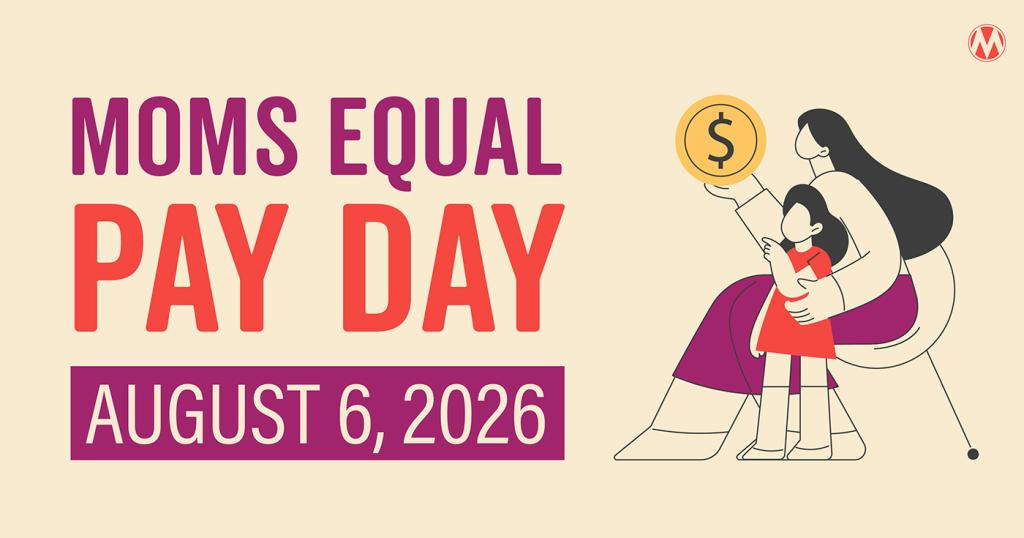
On Moms’ Equal Pay Day, mothers in the United States still earn just 64 cents for every dollar paid to fathers. Comprehensive paid family and medical leave is a proven, high-impact policy solution to close the wage gap and support working families across the nation.
- The Wage Gap Persists: Mothers earn 64 cents on average compared to fathers, with mothers of color experiencing even steeper disparities due to structural inequities.
- State-Level and Federal Proof: Over 40 states and D.C. have expanded leave rights, and the emergency paid leave under the FFCRA proved national paid leave protects family finances and strengthens local economies.
- Action Needed: A patchwork of state laws leaves millions behind. Congress must pass the FAMILY Act to establish a comprehensive nationwide paid family and medical leave standard.
Moms continue to be shortchanged, bringing home, on average, just 64 cents compared to dads. Due to structural inequities and plain ole’ racism, moms of color face even steeper disparities.[1] This gap doesn't just hurt moms today — it steals hundreds of thousands of dollars from families over the course of a career, impacting our children’s futures, our retirement security, and our local economies. It doesn’t have to be this way! Win-win solutions are possible that boost the economy and our families.
There Is Hope: Paid Leave Closes the Wage Gap
We know how to close the wage gap, and one of the most powerful tools to get us there is comprehensive paid family and medical leave for after a new baby arrives or a serious health crisis strikes.
Right now, we are seeing incredible momentum in states and localities across the country.[2] North Carolina JUST expanded their paid parental leave to 12 weeks for public sector employees, including teachers. [3] Earlier this year, Virginia became the first southern state to pass a comprehensive paid family and medical leave program! [4] This adds to the count: 42 states and the District of Columbia have expanded leave rights to workers in their states.
All across the country, cities and states are stepping up, passing paid family and medical leave laws, and proving every single day that opening avenues for working parents to thrive keeps families afloat, allows women to keep much-needed jobs, and keeps businesses strong.
Why America Needs a National Paid Leave Standard
But a patchwork of state laws isn't enough. A mom’s ability to take time to bond with a newborn or care for a critically ill child or an aging parent shouldn't depend on her zip code. We need a national standard. We need Congress to pass the FAMILY Act.
The FAMILY Act would create a nationwide paid family and medical leave program for all workers. And here’s the best part: We already know this is possible, and we know it works.
Proven Solutions That Work for Families and Business
- We’ve seen state-level success: State after state (and D.C.) have successfully implemented paid leave programs, proving every day that paid leave keeps parents in the workforce, protects family finances, and helps local businesses thrive.
- We have proof it works on a national level: When emergency paid leave was implemented under the Families First Coronavirus Response Act (FFCRA), it was a resounding success. It provided a vital lifeline for millions of workers, keeping families financially stable during unprecedented times.
We don't have to guess whether national paid leave works — we already have the proof. Now, Congress needs to step up, build on the incredible progress made in the states, and pass permanent paid leave for everyone.
TAKE ACTION: Tell Congress to support moms and pass the FAMILY Act today!
Equal pay is about more than just the number on a paycheck; it’s about providing the workplace infrastructure that allows moms to stay in the workforce, advance in their careers, and protect their earnings.
Moms can't afford to wait any longer. Thank you for standing with us in this fight!
Frequently Asked Questions
What is the FAMILY Act?
The FAMILY Act (Family and Medical Insurance Leave Act) is federal legislation that would establish a national paid family and medical leave insurance program. It ensures all workers can take time off for caregiving, medical needs, or a new child while receiving partial wage replacement.
How does paid family leave help close the gender wage gap?
Paid family leave allows parents — particularly mothers — to remain attached to the workforce after having a child or managing a health crisis. By preventing women from being forced out of their jobs, paid leave maintains wage growth, job security, and long-term earnings.
Is national paid family leave economically feasible?
Yes. Evidence from over 40 states and the District of Columbia, as well as federal emergency leave under the FFCRA, demonstrates that paid leave programs lower turnover costs for employers, improve employee productivity, and support overall economic growth.
References
- The Wage Gap Robs Mothers of What They’re Owed — National Women's Law Center
- Onward and Upward: Paid Leave Victories from 2020 to Today
- New law expands paid parental leave for teachers and state employees — WUNC News
- Virginia Just Became the First Southern State With Both Paid Leave and Paid Sick Time — Ms. Magazine
- Emergency paid leave during the COVID-19 pandemic offered essential protections for U.S. workers — Equitable Growth
MomsRising advocates for federal enactment of the FAMILY Act on Moms’ Equal Pay Day to establish nationwide paid family and medical leave and eliminate wage disparities.
Close the Wage Gap: Support Moms & Pass the FAMILY Act!
Take ActionRelated Posts


The views and opinions expressed in this post are those of the author(s) and do not necessarily reflect those of MomsRising.org.
MomsRising.org strongly encourages our readers to post comments in response to blog posts. We value diversity of opinions and perspectives. Our goals for this space are to be educational, thought-provoking, and respectful. So we actively moderate comments and we reserve the right to edit or remove comments that undermine these goals. Thanks!