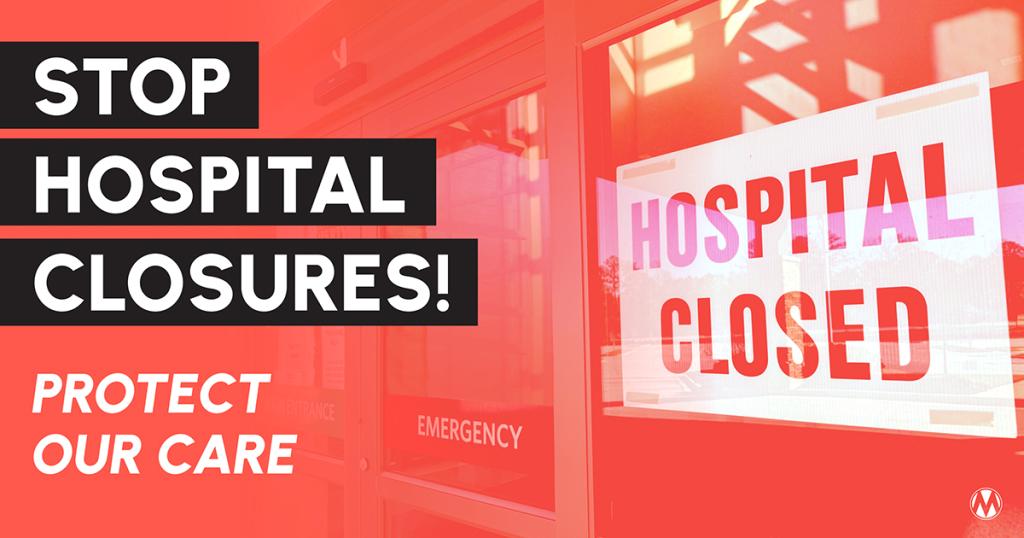
Tell Congress to Stop the Closure of Rural Hospitals! — Take Action Now
Tell Congress to Protect Medicaid — Stop Rural Hospital Closures

The Big Picture
Massive cuts to Medicaid are pushing rural hospitals and maternity wards to the brink of collapse, threatening the health and economic stability of families across the country. We must urge Congress to restore vital funding and ensure that life-saving care remains accessible in every community.
Key Takeaways:- Over 300 rural hospitals and 500 nursing homes are at risk of closure due to massive cuts to Medicaid funding.
- Medicaid and Medicare are essential lifelines for rural health care facilities, covering over half of all patient discharges.
- Hospital closures lead to a 5.9% increase in patient mortality and higher health care costs for surrounding communities.
“A lot of these women are either going to have babies on the road because they can’t make it in time, or they’re gonna just go into labor and go into the ER here, and hope that the ER can deliver their baby, because a lot of people think that that’ll be the same, and it’s not.” — Anonymous Nurse in Georgia
As parents, we’re already stretching every dollar to cover gas and groceries, but no amount of budgeting can help if our local hospital or maternity ward closes. A hospital closure isn’t just a health crisis; it’s an economic one — lost jobs, higher costs for families, and traveling farther for care.
QUICK SIGNATURE to save our hospitals!
The Growing Crisis in Rural Health care
What’s happening? One-third of Americans already report cutting back on daily living expenses to afford health care. In some areas, those rising costs are compounded by the threat of hospital closures. As it becomes harder to afford the basics at home, the life-saving care families rely on is moving farther away, which could turn a trip to the doctor into an hours-long journey with additional expenses.
The $1 trillion health care cuts passed last summer are estimated to leave 10 million more people uninsured by 2034, including 7.5 million excluded from Medicaid coverage. These cuts impact hospitals as well as patients: 330 rural hospitals, 100 urban hospitals, 570 nursing homes, and nearly 200 Planned Parenthood health centers are at risk of closure.
How Medicaid Funding Prevents Hospital Closures
About one-third of community hospitals are located in rural areas. From 2017 to 2023, hospital closures have outpaced hospital openings, and since 2005, 193 hospitals have closed. Data tells us that federal programs such as Medicare cover 53% of patient discharges, while private insurance covers only 19%. There is a clear correlation between the gutting of Medicare and Medicaid and rural hospital closures.
Cuts to Medicaid could lower reimbursement rates that rural hospitals depend on heavily, leading to narrower operating margins and increasing the risk of hospital closures. More than 120 rural hospitals have permanently closed over the past decade, partly due to financial pressures from decreasing Medicaid revenues.
Tell Congress to protect rural hospitals!
The Real-World Impact on Families
Recent legislative threats directly endanger the health and safety of everyday Americans:
- Increased Mortality: Lack of easily accessible hospitals has increased patient mortality by 5.9%.
- Delayed Care: Emergency transportation times have increased by 15 minutes, delaying critical care.
- Economic Instability: Rural communities have 40% less physicians per capita than urban areas. Unemployment rates have increased by up to 3.1% following rural hospital closures.
- Rising Costs: As rural hospitals close, patients at nearby hospitals experience a $500 increase per patient stay to offset the surge in patients.
Frequently Asked Questions
Why are rural hospitals closing at such high rates?
Rural hospitals rely heavily on Medicaid and Medicare reimbursements. When federal funding for these programs is cut, hospitals cannot cover their operating costs, leading to staff shortages and eventual closure.
How do Medicaid cuts affect child care and family stability?
When hospitals close, maternity wards are often the first to go. This forces parents to travel long distances for child care and prenatal services, increasing the financial and physical burden on families already struggling with rising costs.
What can Congress do to stop these closures?
Congress must restore Medicaid funding and protect reimbursement rates for rural facilities to ensure that essential health care services remain accessible and affordable for all Americans, regardless of their zip code.
References
- Gallup: One-third of Americans cut back to cover Health care expenses.
- Guttmacher Institute: Federal Medicaid cuts and reproductive Health care.
- Protect Our Care: Hospital Crisis Watch.
- KFF: Key facts about hospitals and profit margins.
- University of Minnesota: Rural hospital closures and price increases.
This article discusses the critical need for Congress to protect Medicaid funding to prevent the closure of rural hospitals and ensure family Health care access.
Tell Congress to Stop the Closure of Rural Hospitals!
Take ActionRelated Posts


The views and opinions expressed in this post are those of the author(s) and do not necessarily reflect those of MomsRising.org.
MomsRising.org strongly encourages our readers to post comments in response to blog posts. We value diversity of opinions and perspectives. Our goals for this space are to be educational, thought-provoking, and respectful. So we actively moderate comments and we reserve the right to edit or remove comments that undermine these goals. Thanks!