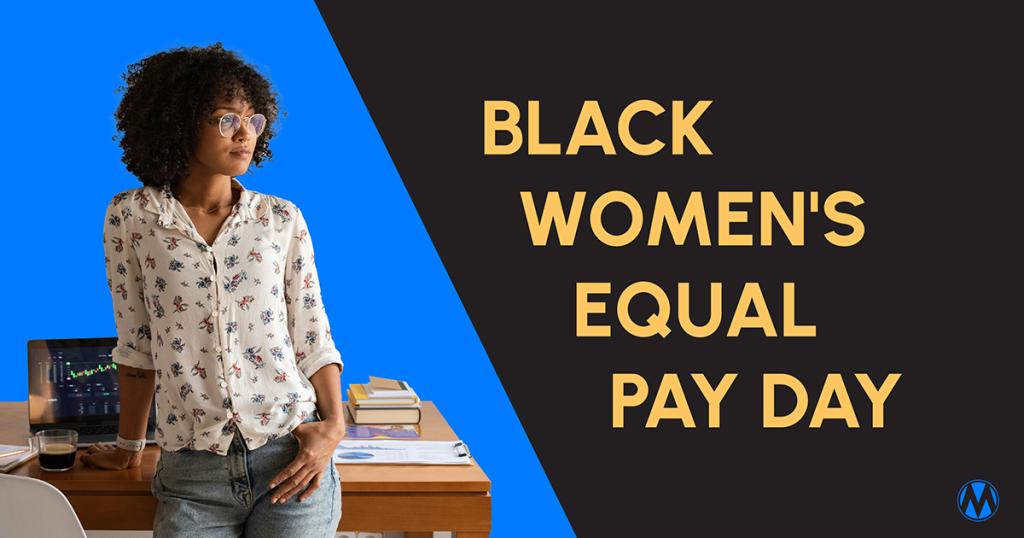
Black Women's Equal Pay Day — Tell the EEOC to Protect Pay Equity Data
Key Takeaways
The Wage Gap Persists: On Black Women’s Equal Pay Day, statistics show Black women full-time workers earn just 65 cents for every dollar paid to non-Hispanic white men, with Black mothers earning only 56 cents relative to white fathers.
- Systemic Barriers: A frozen federal minimum wage for 17 years and workplace discrimination continue to disproportionately harm Black women across all education levels.
- Threat to Accountability: The Equal Employment Opportunity Commission (EEOC) is proposing to eliminate EEO-1 demographic data collection, threatening essential transparency around corporate wage discrimination.
- Take Action Now: MomsRising is calling on supporters to sign the petition urging the EEOC to protect EEO-1 data collection and support pay equity for Black women.
Today, July 21st, we observe Black Women’s Equal Pay Day — a sobering reminder of the systemic wage gap that continues to shortchange Black women and harm their families.
This day does not represent a milestone of catching up; rather, it symbolizes the compounding toll of lost wages — money stripped from Black women's pockets that they will never recover.
Sign on to support Black women in achieving equal pay!
The Devastating Reality of the Numbers [1]
- 65 cents: What Black women working full-time, year-round are paid for every dollar paid to non-Hispanic, white men.
- 63 cents: The wage gap when looking at all Black women earners — including full-time, part-time, and part-year workers — compared to all working non-Hispanic white men.
- 56 cents: The wage gap faced by Black mothers working full-time, year-round compared to every dollar paid to non-Hispanic, white fathers.[2]
Sign our petition this Black Women’s Equal Pay Day!
Structural Barriers and Nearly Two Decades of Inaction
The structural barriers keeping Black women underpaid are deeply entrenched. In fact, just three days after we observe Black Women's Equal Pay Day, July 24 marks 17 years since the federal minimum wage rose to a measly $7.25 — which is where it sits right now! [3]
Seventeen years without a raise at the federal level is a policy failure that disproportionately impacts Black women, who remain heavily overrepresented in low-paid, vital service industries like caregiving, health care, and education. We are working hard, anchoring our communities, and serving as primary breadwinners — yet the economic floor has been frozen for nearly two decades, locking in this cycle of lost wealth. [4]
But this injustice is not limited to low-wage jobs, and higher education does not buy protection from systemic bias. Even at the highest levels of education, the racist and sexist wage gap persists — with Black women holding professional degrees earning just 59% of what white men make. [5] From the service floor to the corporate office, Black women's labor is systemically devalued.
Sign on to support Black women in achieving equal pay!
Rollbacks and Job Losses Compound Economic Insecurity
It’s clear: Working harder, negotiating better, or earning advanced degrees won't close this gap on their own because the system itself is broken by racism, sexism, and a lack of structural accountability. Worse, these disparities are being actively compounded by Trump Administration rollbacks and attacks on diversity, equity, and inclusion. [6]
The first year of the administration’s second term has been devastating for our workforce: Black women lost a net total of 113,000 jobs in 2025 alone! At the height of last summer's economic volatility, Black women accounted for about 55% of all female job losses, despite making up only 14% of the female workforce. Driven by mass federal layoffs and the systematic dismantling of DEI initiatives, these policies are actively pushing Black women out of the labor market and stripping our communities of vital economic stability. [7]
Critical Threat: Protect EEO-1 Demographic Data Collection
Right now, we are facing a very real and critical threat to pay equity: The Equal Employment Opportunity Commission (EEOC) is proposing to cut the EEO-1 demographic data collection!
This data collection is a vital tool that forces large companies to report pay data broken down by race and gender. It pulls back the curtain on discrimination and holds corporations accountable. By trying to eliminate it, the administration is attempting to shield corporations and hide these lost wages in the shadows.
We cannot let them blindfold the regulators tasked with protecting us.
Moms and families are demanding that Congress and the Trump Administration stop the attacks on Black women and our economic security.
Together, we will fight these structural inequities one by one and build a system that treats Black women with the dignity, respect, and compensation they deserve.
Have you experienced workplace wage discrimination?
Have you or someone you love faced workplace discrimination or unfair pay? Sharing personal stories with lawmakers is one of our most powerful tools to make change. Tell us your experience here.
Frequently Asked Questions
What is Black Women’s Equal Pay Day?
Black Women’s Equal Pay Day marks how far into the current calendar year Black women must work, on average, to earn what non-Hispanic white men earned in the prior year alone. It underscores the ongoing impact of the systemic wage gap on Black women and their families.
What is EEO-1 data and why is it important for pay equity?
EEO-1 data collection requires large employers to submit demographic workplace information broken down by race, ethnicity, and sex. This data is critical for regulators and advocacy groups to identify pay disparities, track workplace diversity, and hold corporations accountable for discriminatory wage practices.
How does the federal minimum wage impact the wage gap for Black women?
Because Black women are disproportionately represented in low-wage service sectors — including health care, child care, and hospitality — keeping the federal minimum wage frozen at $7.25 per hour suppresses income levels for millions of workers and expands the overall wage gap.
References
- Equal Pay Today — Black Women’s Equal Pay Day
- National Women's Law Center — The Wage Gap Robs Mothers of What They’re Owed
- NPR — It has now been 15 years since the federal minimum wage rose to $7.25
- National Partnership for Women & Families — Black Women and the Wage Gap
- Institute for Women's Policy Research — Across Degrees, Titles, and States, Black Women Earn Just 64 Cents on the Dollar
- The American Prospect — Federal Job Cuts Hit Black Women Hard — a Year Later, Unemployment Is Up
- Institute for Women's Policy Research — IWPR New Report: Black Women Disproportionately Sidelined in Year One of Trump's Second Term
This article outlines the systemic wage gap facing Black women on Black Women's Equal Pay Day and details actions to protect EEOC pay transparency data.
Demand Black Women’s Equal Pay
Take ActionRelated Posts

The views and opinions expressed in this post are those of the author(s) and do not necessarily reflect those of MomsRising.org.
MomsRising.org strongly encourages our readers to post comments in response to blog posts. We value diversity of opinions and perspectives. Our goals for this space are to be educational, thought-provoking, and respectful. So we actively moderate comments and we reserve the right to edit or remove comments that undermine these goals. Thanks!