Paid Sick Days
Paid sick days are a matter of economic security. No mother should have to choose between her job and taking care of a sick child. We are working to make earned paid sick days a right for all.
Blog posts


Take Action
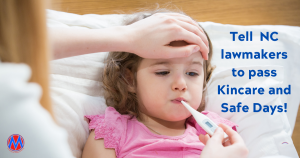
We need your help! A NC bill has been introduced that would guarantee employees the right to use their sick days (whether paid or job-protected, unpaid) to care for a sick loved one, seek preventative care, or deal with the physical, mental, or legal impacts of domestic violence, sexual assault, or stalking. The KinCare and Safe Days Act (H875) would be game-changing for so many families, but in order for it to keep moving forward it has to pass out of the NC House this week. Can you send a quick email to your representative right now letting them know it’s critical that they pass Kincare and Safe Days? They need to hear from you!

Whether a worker needs paid sick days to recover from their own illness, to care for a loved one or is a survivor of domestic violence, stalking or sexual assault and needs to use their paid sick days to recover or seek assistance related to an incident, all workers deserve paid sick days.

A living wage. Paid sick days. Paid family and medical leave. These policies represent the essential building blocks of what working people need to provide for themselves and their families. But in North Carolina none of them are guaranteed by law. RSVP now to join us and tell lawmakers why these issues are so important.
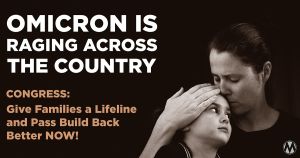
Just as families need support the most, monthly Child Tax Credit payments ended in December because Joe Manchin and the Republican Senators refused to pass Build Back Better. With Omicron raging, it's more important than ever to pass BBB to make child care and elder care affordable, guarantee paid family and medical leave, lower the cost of insulin and other prescription drugs, make healthcare more affordable, and more.